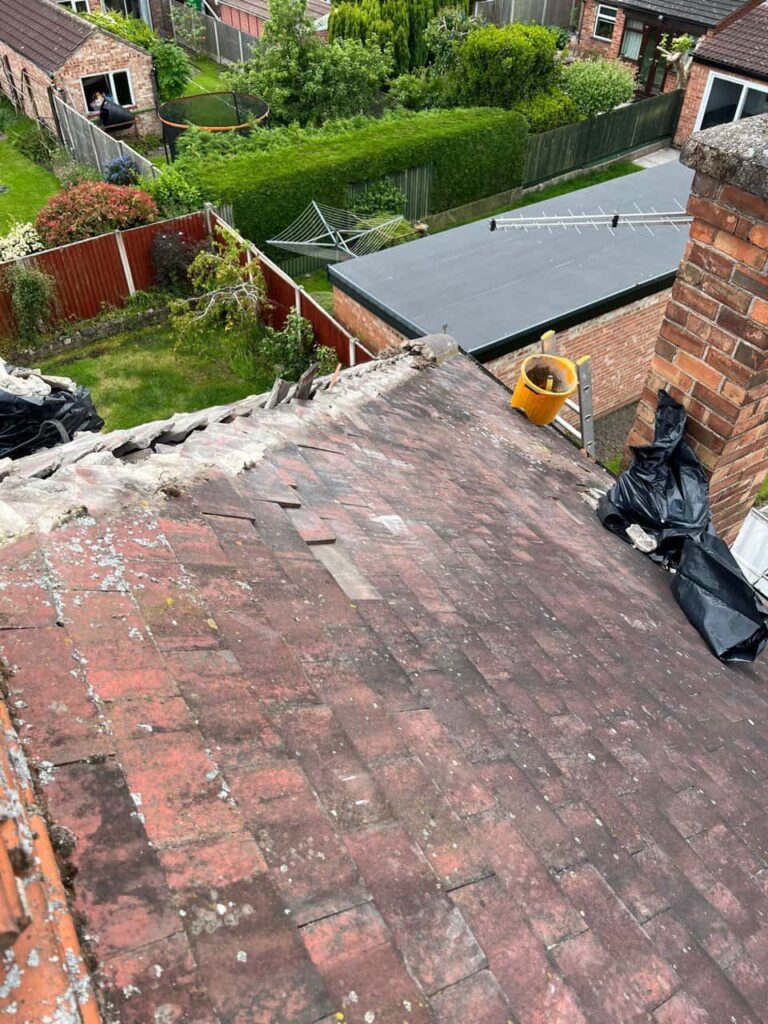
A roof repair should address the cause of a problem and restore reliable protection to the affected area. However, there are situations where a leak, slipped tile or other roofing issue appears to return after previous work. When this happens, it does not necessarily mean that the same component has failed again. The original source may have been elsewhere, surrounding materials may have deteriorated, or several related defects may be contributing to the problem.
For property owners in Upper Stoke, Lincolnshire, recurring roofing problems are a good reason to look beyond the latest visible symptom. A detailed assessment can establish why the issue continues and whether a targeted repair or a broader approach is needed.
Why Identifying the True Cause of a Roof Problem Matters
One of the main reasons roofing problems return is that the visible symptom and the underlying cause are not always in the same place.
A damp patch on a ceiling, for example, does not necessarily sit directly beneath the point where rainwater is entering the roof. Water can travel along underlay, timbers and other components before becoming visible internally. Repairing the area immediately above the damp patch may therefore leave the actual entry point unchanged.
Effective roof repairs begin with diagnosis. Understanding how the roof is constructed, where water is likely to travel and which materials have deteriorated provides a much stronger basis for lasting work.
Water Can Travel Before It Becomes Visible
Tracing a roof leak can be more complicated than simply locating the wettest internal area.
Once rainwater passes beneath the external roof covering, gravity and the arrangement of roofing components can direct it away from the original entry point. The visible evidence inside the property may therefore appear some distance from the defect.
This is particularly important when a leak has apparently returned after a repair. The repaired section may still be performing correctly while water is entering through another nearby weakness.
A wider inspection helps establish whether this is happening.
Several Small Defects Can Create One Recurring Problem
Some roofing problems do not have one single cause.
A roof may contain several minor weaknesses around the same area, such as deteriorating flashing, damaged tiles and worn junction details. Repairing the most obvious defect can improve the situation without completely resolving it if another vulnerable point remains.
When a problem repeatedly returns, examining the surrounding roof rather than concentrating only on the previous repair can reveal these connected defects.
The Previous Repair May Not Be the Problem
It is easy to assume that recurring symptoms mean previous repair work has failed. This should not be taken for granted.
A correctly completed repair can remain secure while another component nearby develops a defect. Roofing materials experience similar weather exposure, so several components within an ageing section can sometimes require attention at different times.
Checking the condition of the previous repair alongside neighbouring materials helps distinguish between genuine repair failure and a separate developing problem.
Deterioration Can Extend Beyond the Visible Area
Roof damage is not always limited to what can be seen externally.
A cracked tile, damaged flashing detail or localised leak may have allowed moisture to affect materials beneath the covering. If deterioration extends into underlay, battens or other components, addressing only the surface defect may not fully restore the affected section.
This is why investigation of recurring problems needs to consider both the visible roof covering and, where appropriate, the condition of accessible underlying materials.
Roof Junctions Require Careful Assessment
Junctions are common areas for roofing problems because several different components often meet within a relatively small space.
Flashing, tiles or slates and adjoining roof surfaces all need to work together to direct water correctly. If one element deteriorates, water can sometimes exploit another nearby weakness even after the first defect has been repaired.
Recurring leaks around junctions therefore benefit from assessment of the complete detail rather than repeated attention to one small point.
Valleys Can Produce Misleading Leak Locations
Roof valleys carry rainwater from adjoining roof slopes and are particularly important drainage routes.
A defect higher along a valley may allow water beneath the roof covering, but the resulting moisture can travel before it becomes visible. This can make the apparent source of a leak misleading.
Where previous repairs have not stopped recurring water ingress, checking the complete valley and surrounding materials can help identify defects that may previously have been overlooked.
Slipped or Loose Tiles May Indicate a Deeper Issue
Replacing or repositioning a slipped tile may be sufficient when the problem is genuinely isolated. Repeated tile movement in the same area, however, deserves closer investigation.
The tile itself may not be the main cause. Fixings or supporting components can deteriorate, allowing movement to continue even when individual tiles are replaced.
If several tiles repeatedly become loose or displaced, checking what is happening beneath and around them is essential to achieving a dependable repair.
Weather Can Expose an Unresolved Weakness
Some roof problems seem to disappear after repair and then return during particular weather conditions.
The direction of wind-driven rain can influence where water reaches a roof, while prolonged rainfall may expose weaknesses that are not noticeable during shorter showers. This can make an unresolved defect appear intermittent.
Understanding when the problem occurs can therefore provide useful information during diagnosis. A leak that appears only under particular conditions may help indicate which part of the roofing system requires closer attention.
Previous Repair Areas Can Provide Valuable Clues
The repair history of a roof can help identify patterns.
If several repairs have been concentrated around one particular section, it may indicate that the area contains a more complex underlying problem. If previous repairs are spread across different sections, general deterioration may be becoming more relevant.
A professional assessment should consider this history rather than viewing the latest defect completely in isolation.
Repeated Repairs Can Signal Wider Roof Deterioration
An occasional repair is a normal part of maintaining many roofs. However, increasingly frequent problems can sometimes indicate that deterioration is becoming more widespread.
If tiles, flashing, ridge details, valleys and other components are beginning to require attention within relatively short periods, another isolated repair may not provide the complete picture.
This does not automatically mean roof replacement is necessary. It does mean that assessing the overall condition of the roof becomes increasingly valuable.
Why a Broader Roof Inspection Can Be More Effective
When a problem has returned several times, concentrating solely on the latest visible defect can limit the investigation.
A broader inspection can consider:
- The condition and alignment of the roof covering
- Flashing and leadwork
- Valleys and roof junctions
- Ridge and hip details
- Previous repair areas
- Signs of water penetration
- Accessible underlay and supporting components
- Surrounding areas that may contribute to the reported problem
This approach provides a better understanding of how different parts of the roof are performing together.
Lasting Roof Repairs Depend on Accurate Diagnosis
The quality of a roof repair begins before materials are replaced or adjusted. Correctly identifying the cause determines what work is actually required.
At Upper Stoke Roofing Repairs, we focus on investigating the source and extent of roofing problems before recommending an appropriate solution. When a problem has returned after previous work, considering both the repaired area and the wider roof can help establish whether the issue is localised, connected to neighbouring defects or part of broader deterioration.
This diagnostic approach helps ensure that repair work is directed towards the actual cause rather than repeatedly treating the same visible symptom.
Conclusion
Roof problems can return after repairs for several reasons. Water may be entering somewhere different from where it becomes visible, several small defects may be contributing to the same issue, or deterioration may extend further than originally apparent. In other cases, the previous repair may remain completely sound while another nearby component has developed a problem.
The important step is to investigate why the issue is recurring rather than simply repeating the same repair. A thorough assessment can identify the true source of the problem and determine what work is needed to restore reliable roof performance.
If you are experiencing a recurring roofing problem at your property in Upper Stoke, Lincolnshire, contact Upper Stoke Roofing Repairs. We can assess the affected area, investigate the underlying cause and recommend appropriate repair work based on the condition of your roof.
Call us on: 01782 493 998
Click here to find out more about Upper Stoke Roofing Repairs
Click here to complete our contact form and see how we can help with your roofing needs.